This manual details the plow’s rich history, from ancient wooden designs to modern steel implements, exploring its pivotal role in shaping agricultural civilizations.
Understanding plowing techniques and maintenance ensures optimal soil health and efficient farming practices for generations to come.
What is a Plow?
A plow is a fundamental agricultural implement used for centuries to prepare soil for cultivation. Its primary function involves turning over, or inverting, the soil, creating furrows that expose fresh nutrients and bury weeds.
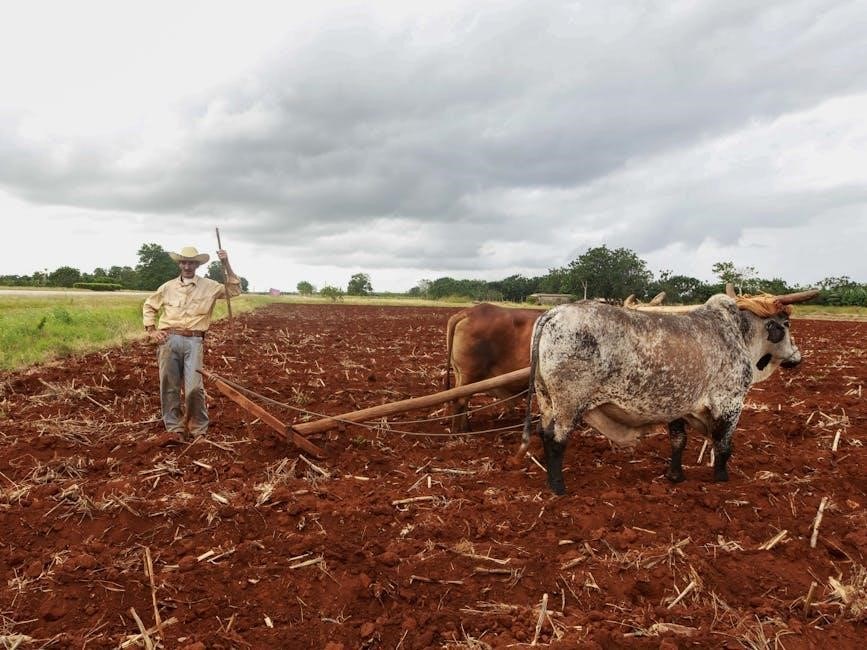
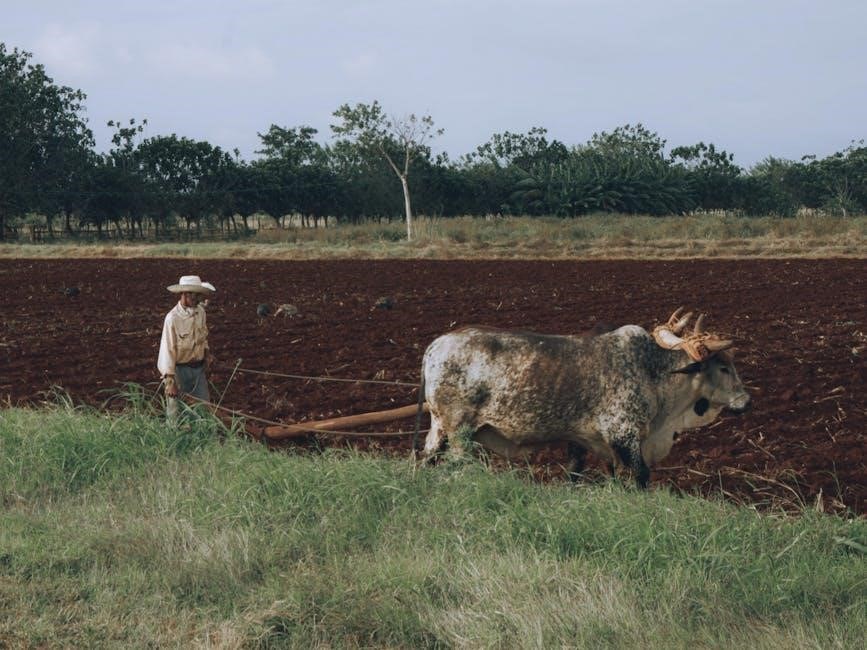
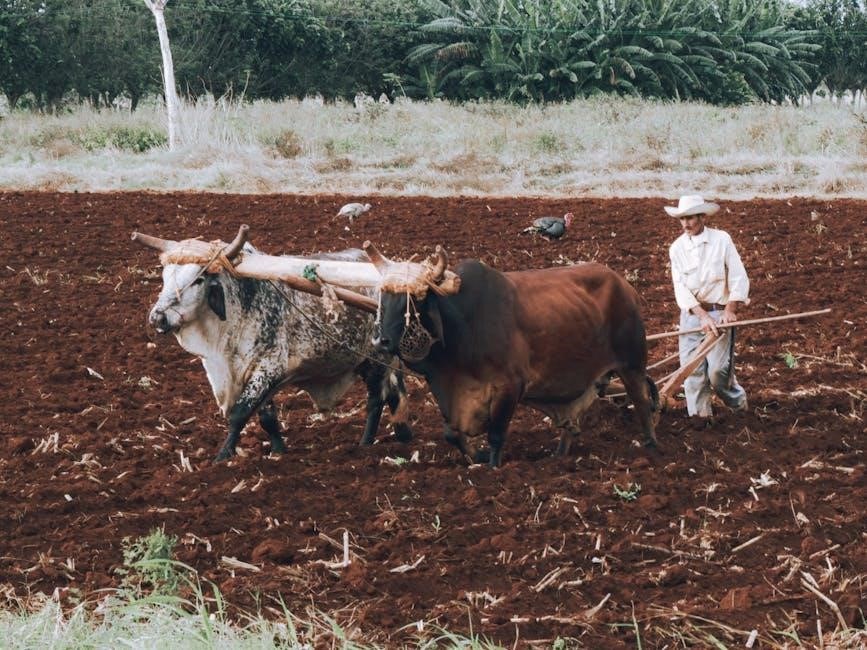
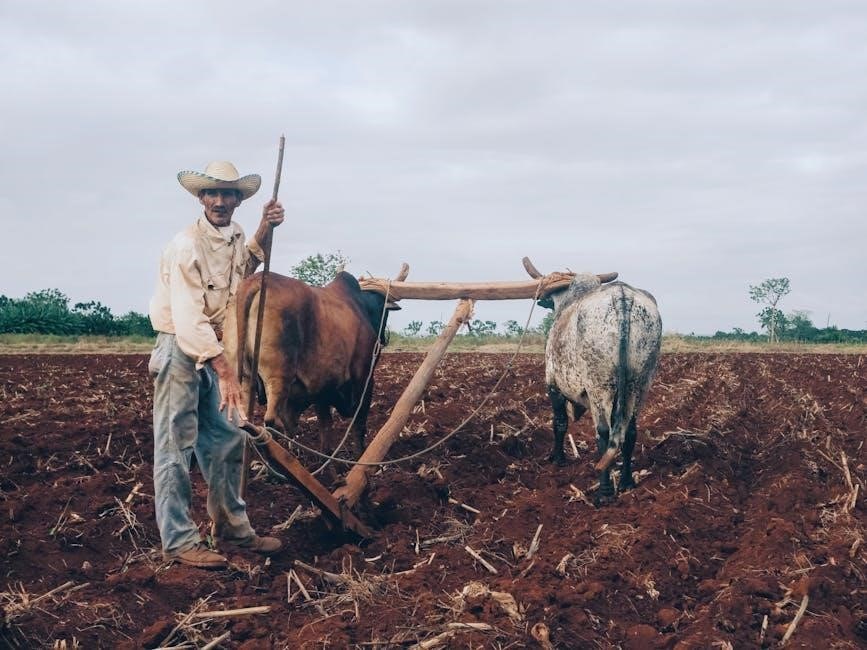
Historically, plows were simple wooden constructions, pulled by draft animals like oxen or horses; These early designs, such as the wooden beam walking plow, focused on basic soil disruption.
However, the evolution of the plow, particularly with the introduction of the moldboard plow, revolutionized farming. This design effectively cuts, lifts, and turns the soil, improving aeration and water retention. Modern plows, like sulky type gang plows, utilize multiple blades for increased efficiency, demonstrating a continuous refinement of this essential tool.
Historical Significance of the Plow
The plow’s impact on civilization is profound, marking a turning point in human history with the birth of agriculture. It enabled settled communities, surplus food production, and the development of complex societies.
For early pioneers settling the prairies of the U.S. and Canada, the moldboard plow was an essential tool, becoming a symbol of American agriculture around 1850. It facilitated grain crop cultivation, supporting a growing population.
The steel plow, pioneered by John Deere, was particularly transformative, allowing farmers to efficiently break the tough prairie soil. This innovation fueled westward expansion and dramatically altered the agricultural landscape.
Early Plow Designs
Initial plows were simple, wooden beam walking plows, requiring manual labor and a single draft animal for operation. Hillside walking plows adapted to sloping terrain.
Wooden Beam Walking Plows
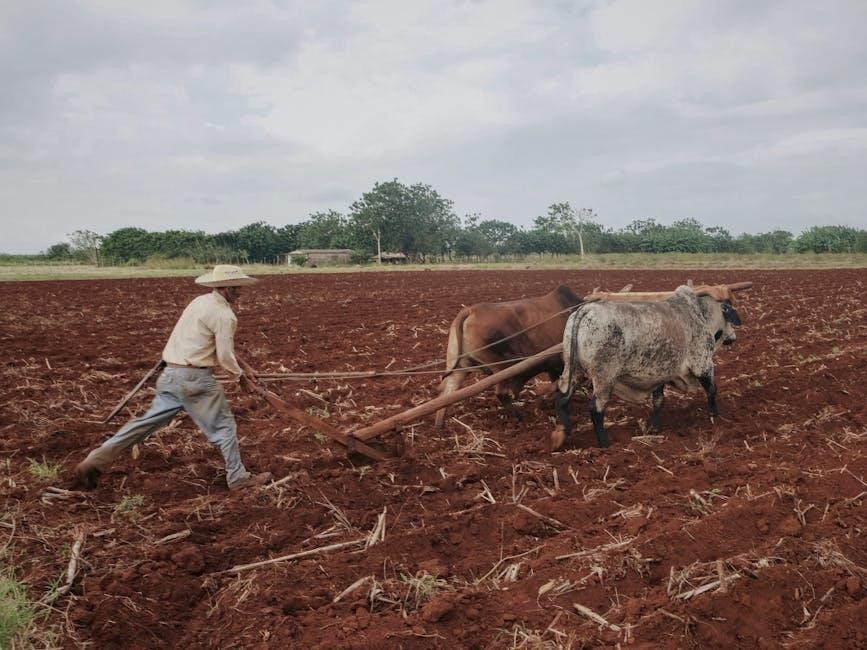
The earliest plow designs, known as wooden beam walking plows, represented a fundamental shift in agricultural practices. These plows were characterized by their simple construction, primarily utilizing wood for the frame and moldboard. Typically, a single draft animal – often an ox or horse – provided the necessary power to pull the plow through the soil.
The plowman would walk alongside the animal, guiding the plow and controlling the depth of the furrow. These plows were effective in turning over the soil, burying weeds, and preparing the ground for planting. However, they were limited in their ability to handle tougher soils or large-scale farming operations; The generic design, as illustrated, highlights its basic functionality and reliance on manual effort.
Despite their limitations, wooden beam walking plows were instrumental in the development of early agricultural societies, laying the groundwork for more advanced plowing technologies.
Hillside Walking Plows & Contour Plowing
Addressing the challenges of uneven terrain, hillside walking plows were developed to facilitate farming on slopes. These plows featured a unique design with dual moldboards, functioning as either a right or left-handed plow depending on the land’s inclination. This adaptability allowed farmers to effectively plow across hillsides without creating excessive erosion or uneven furrows.
Contour plowing, a technique used in conjunction with hillside plows, involved plowing along the contour lines of the land. This method helped to conserve soil and water by creating ridges that acted as barriers to runoff. The illustration clearly demonstrates how the dual moldboards navigate sloping land.
Hillside walking plows and contour plowing were crucial for maximizing agricultural productivity in hilly regions, promoting sustainable land management practices and ensuring long-term soil health.
The Moldboard Plow
The moldboard plow, a cornerstone of American agriculture since 1850, revolutionized farming by inverting soil, creating an ideal environment for grain crops to flourish.
The Moldboard Plow in American Agriculture
The moldboard plow’s arrival dramatically altered the landscape of American agriculture, particularly impacting the settlement and cultivation of the vast prairies. Historically, it became an essential tool for pioneers establishing farms across the central and western United States and Canada.
Before its widespread adoption, prairie soil presented a significant challenge to farmers due to its dense, matted root systems. The moldboard plow, with its curved moldboard, effectively turned over this tough soil, burying organic matter and creating a loosened, aerated seedbed.
This innovation allowed for successful grain production, meeting the demands of a growing population and fueling westward expansion. The plow wasn’t merely a tool; it symbolized progress and the ability to tame the land, becoming a potent emblem of U.S. agricultural identity.
Impact on Prairie Settlement
The moldboard plow fundamentally reshaped the possibilities for prairie settlement, transforming an area once considered unsuitable for large-scale agriculture into the nation’s breadbasket. Prior to its widespread use, the dense, interwoven root systems of prairie grasses posed an insurmountable barrier to conventional farming methods.
The plow’s ability to efficiently break and turn over this tough sod unlocked vast tracts of land for cultivation, attracting waves of settlers eager to establish farms. This, in turn, spurred the growth of towns and infrastructure, accelerating the pace of westward expansion.
The success of prairie agriculture, enabled by the moldboard plow, directly contributed to the economic prosperity and demographic shifts of the 19th-century United States.
The Steel Plow Revolution
The introduction of the steel plow, notably by John Deere, marked a turning point in agricultural technology, offering superior strength and efficiency.
Steel’s ability to cut through tough prairie soil quickly and reliably revolutionized farming practices.
John Deere and the Steel Plow
John Deere, born in Vermont in 1804, became a pivotal figure in agricultural innovation. Initially apprenticed as a blacksmith, his skills proved highly successful, but economic hardship in New England prompted a move to Grand Detour, Illinois, in 1836.
Facing the challenge of prairie soil, Deere recognized the limitations of existing cast iron plows. He ingeniously adapted steel blades – potentially utilizing saw blades – to create a plow that could effectively cut through the dense, sticky earth.
This steel plow was lighter, stronger, and more reliable than its predecessors, dramatically improving farming efficiency and enabling the successful cultivation of the vast prairies of the Midwest. Deere’s invention wasn’t just a tool; it was a catalyst for agricultural expansion and settlement.
Advantages of Steel Plows
The transition from cast iron to steel plows marked a significant leap forward in agricultural technology. Steel’s inherent strength and lighter weight offered substantial benefits to farmers contending with challenging prairie soils.
Unlike cast iron, steel plows resisted breakage and wear, reducing downtime for repairs and increasing overall productivity. This durability translated to cost savings and a more reliable farming experience.
The improved cutting ability of steel allowed for quicker and more efficient plowing, enabling farmers to cultivate larger areas of land in less time. This was crucial for meeting the growing demands of a rapidly expanding population and fueling agricultural growth.
Evolution of Plow Technology
Plows evolved from simple wooden designs to two-wheeled models with driver’s seats, and eventually to steam-powered tractor plows, increasing efficiency and scale.
Two-Wheeled Plows with Driver’s Seats
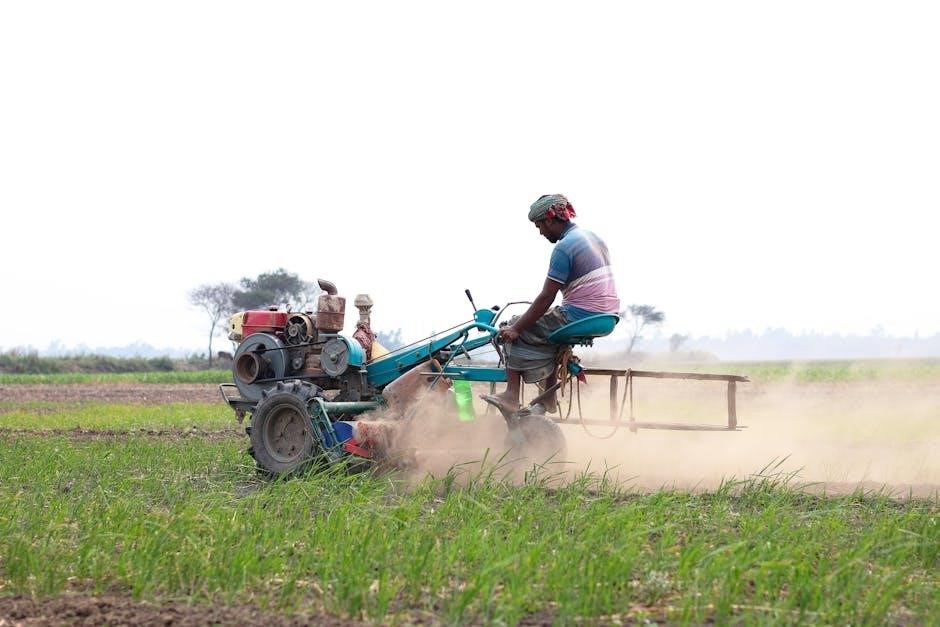
The introduction of two-wheeled plows, featuring a comfortable driver’s seat, marked a significant advancement in agricultural technology during the latter half of the 19th century. These plows offered a substantial improvement over earlier walking plow designs, reducing the physical strain on the farmer and enabling them to cover more ground efficiently.
The seated position allowed for better control and a more relaxed plowing experience, while the two-wheel configuration provided increased stability, particularly on uneven terrain. This innovation facilitated deeper and more consistent furrows, contributing to improved soil aeration and seedbed preparation. Farmers could now cultivate larger areas with less effort, boosting agricultural productivity and supporting the growing demands of a rapidly expanding population.
These plows represented a crucial step towards mechanized agriculture, paving the way for the eventual adoption of tractor-powered plowing systems.
Steam-Powered Tractor Plows
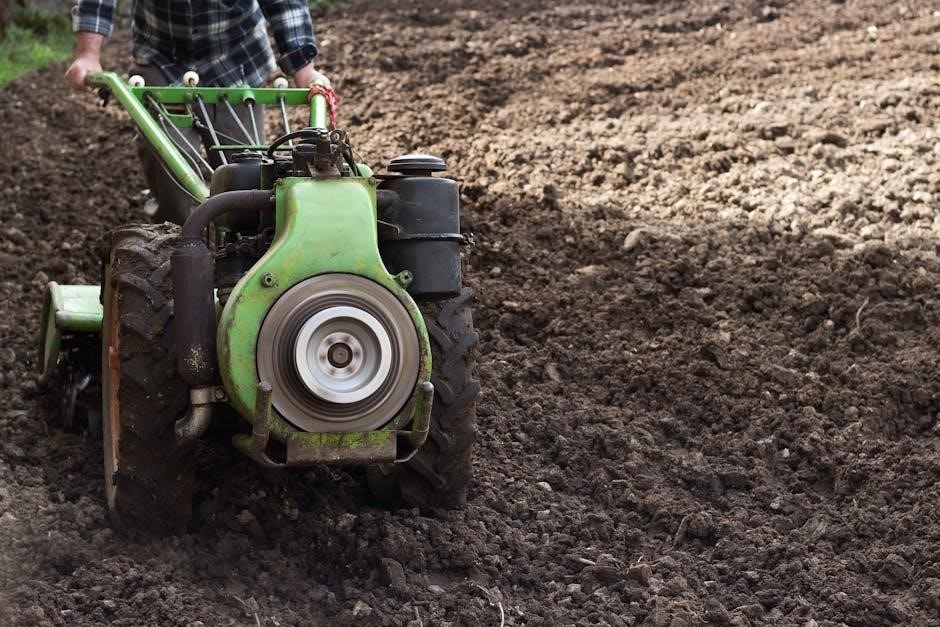
From the 1890s, a revolutionary shift occurred with the emergence of steam-powered tractor plows, fundamentally altering the landscape of agricultural practices. These behemoths represented a leap towards complete mechanization, replacing animal power with the brute force of steam engines.
Early steam tractor plows were massive and complex machines, capable of pulling multiple plows simultaneously, dramatically increasing plowing speed and acreage. While initially expensive and requiring skilled operators, they quickly proved their worth in tackling vast fields of prairie land. The transition wasn’t seamless, requiring infrastructure for fuel and water, but the efficiency gains were undeniable.
This innovation signaled the beginning of the end for traditional animal-powered plowing, ushering in an era of large-scale, mechanized agriculture.
Types of Modern Plows
Modern plows encompass sulky-type gang plows, raised above soil during turns, and variations of the moldboard plow, designed for diverse farming needs.
Sulky Type Gang Plows
Sulky type gang plows represent a significant advancement in plowing technology, offering increased efficiency and productivity for farmers. These plows feature multiple moldboards mounted on a common frame, allowing them to simultaneously turn over several furrows with each pass.
The “sulky” aspect refers to the operator’s seat and steering mechanism, positioned above and behind the plow. This design reduces the physical strain on the farmer compared to walking behind a traditional plow.
As noted in historical illustrations, these plows are raised by the plowman above the soil when the team turns at the end of a furrow, streamlining the process. They were particularly valuable for large-scale farming operations, enabling quicker and more thorough cultivation of expansive fields.
Modern Moldboard Plow Variations
While the fundamental principle of the moldboard plow remains consistent, modern variations incorporate numerous refinements for enhanced performance and adaptability. These include adjustable furrow width, depth control, and features designed to manage crop residue effectively.
Contemporary moldboard plows often utilize heavier, more durable materials, extending their lifespan and allowing them to tackle challenging soil conditions. Some models feature automatic reset mechanisms, protecting them from damage when encountering obstructions like rocks or roots.
Despite the rise of no-till farming, the moldboard plow continues to be a valuable tool in specific agricultural contexts, particularly where soil structure requires improvement or weed control is paramount.
Plowing Techniques
Mastering plowing involves understanding furrow formation and utilizing techniques like contour plowing, adapting to land slopes for efficient soil turning and erosion control.
Understanding Furrows
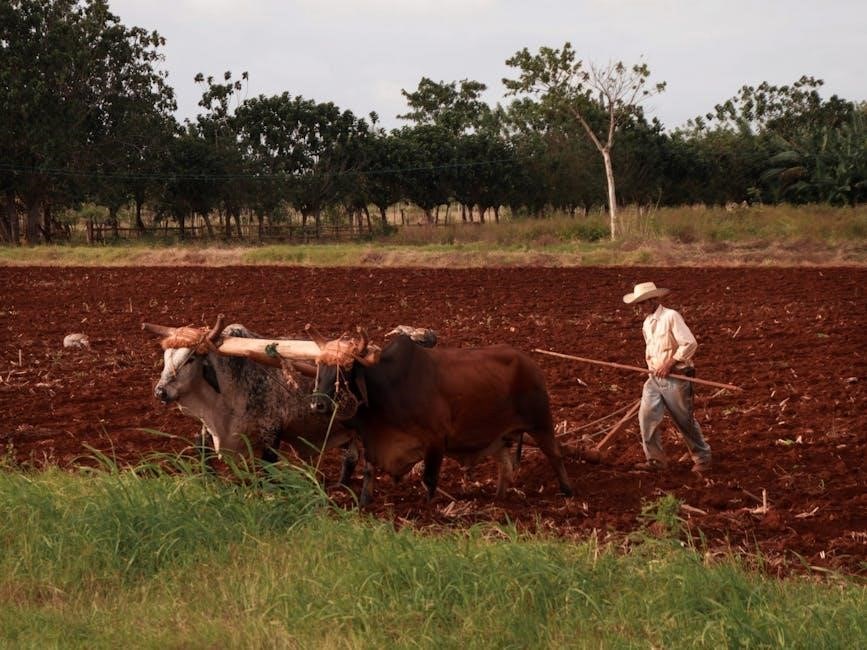
Furrows are the long, narrow trenches created as a plow moves across a field, representing the fundamental unit of plowed soil. The process involves inverting soil, burying crop residue, and aerating the ground, all within the furrow’s boundaries.
A complete plowing cycle consists of turning the plow at the end of each furrow, raising it above the soil to facilitate a smooth transition. This maneuver, crucial for maintaining consistent depth and direction, requires skill and coordination from the plowman.
The shape and quality of the furrow directly impact seedbed preparation, influencing drainage, root development, and ultimately, crop yield. Proper furrow formation is therefore paramount for successful agricultural practices.
Contour Plowing Explained
Contour plowing is a soil conservation technique employed on sloping land, following the elevation’s curves rather than directly up and down the hill. This method minimizes soil erosion by creating a series of ridges and furrows that act as barriers to water runoff.
Hillside walking plows, featuring dual moldboards, are specifically designed for contour plowing, functioning as either right or left-handed plows depending on the slope’s direction. This adaptability allows for efficient plowing along the contours.
By slowing water flow and increasing infiltration, contour plowing conserves soil moisture and reduces the risk of gully formation, promoting sustainable agricultural practices and preserving valuable topsoil.
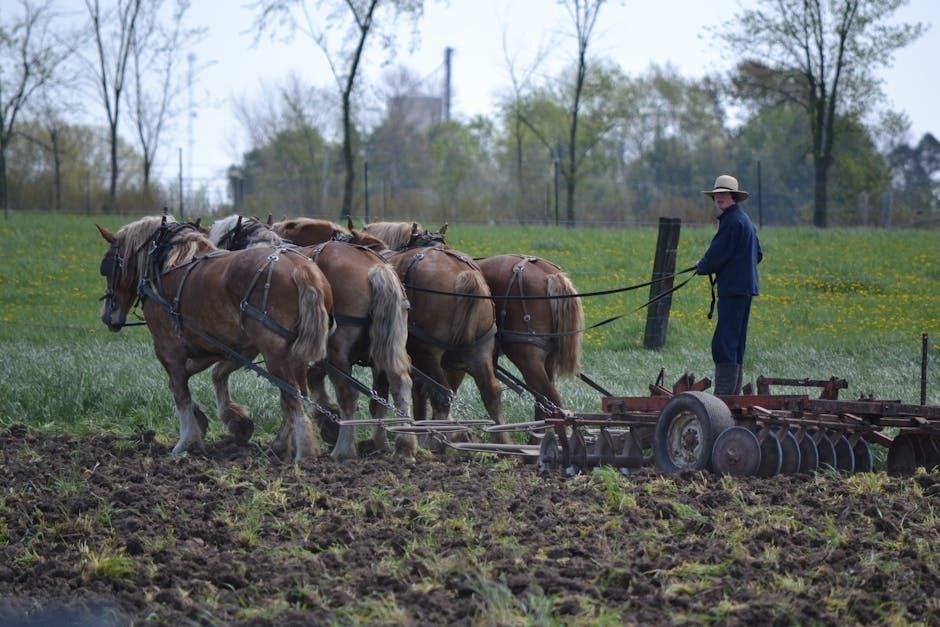
No-Till Farming and the Plow
No-till farming minimizes soil disturbance, challenging the traditional role of the plow, but understanding the plow’s impact on the soil environment remains crucial for informed decisions.
The Rationale for No-Till
The shift towards no-till farming stems from a growing awareness of the detrimental effects of intensive tillage on soil health. Traditional plowing, while historically essential, disrupts the soil structure, leading to erosion, reduced water infiltration, and loss of vital organic matter.
No-till practices aim to minimize this disturbance, preserving the soil’s natural ecosystem. By leaving crop residue on the surface, farmers can enhance moisture retention, suppress weed growth, and improve overall soil fertility. This approach also reduces fuel consumption and labor costs, offering economic benefits alongside environmental advantages.
However, it’s important to note that no-till isn’t a universal solution. Successful implementation requires careful consideration of specific soil types, climate conditions, and crop rotations.
Plow’s Role in Soil Environment
Historically, the moldboard plow dramatically altered the soil environment, creating conditions favorable for grain crops. By inverting the soil, it buried weed seeds and crop residue, providing a relatively clean seedbed. This practice also initially improved aeration and water infiltration, boosting yields for early settlers on the prairies.
However, this intensive tillage also had drawbacks. Repeated plowing led to the breakdown of soil aggregates, increasing susceptibility to erosion and reducing organic matter content. The disruption of natural soil layers impacted beneficial microbial communities, diminishing long-term soil health.
Understanding this complex relationship is crucial for modern agricultural practices, prompting a reevaluation of tillage methods and a move towards more sustainable approaches;
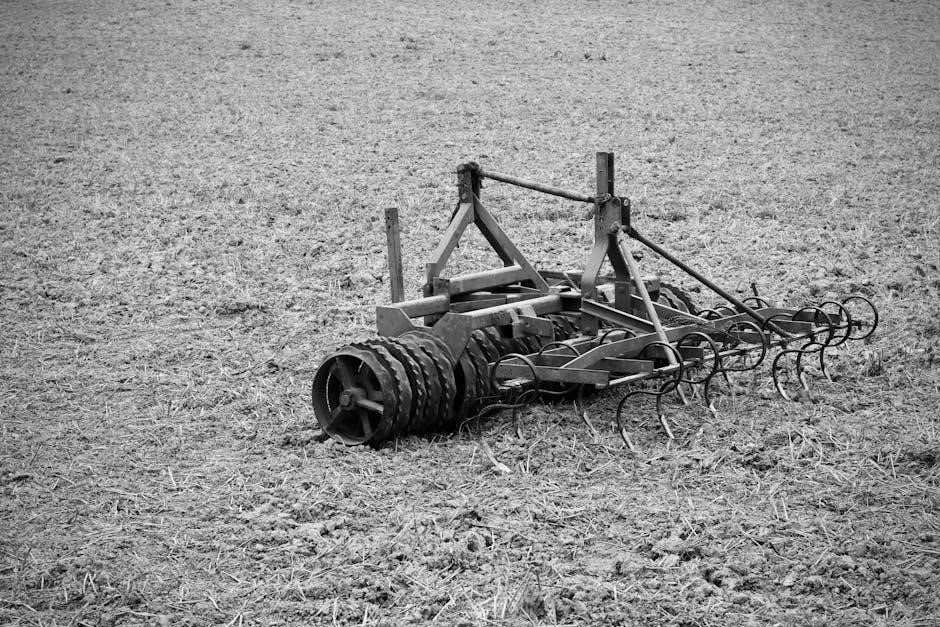
Maintaining and Repairing Plows
Regular inspection and maintenance are vital for plow longevity and performance. Addressing common issues like worn shares and damaged moldboards ensures efficient operation and safety in the field.
Common Plow Issues
Plows, despite their robust construction, are susceptible to various issues impacting performance. Worn or broken plowshares are frequent, reducing cutting efficiency and requiring replacement. Damage to moldboards, often from striking rocks or hard soil, hinders proper furrow formation and soil inversion.
Landslides, the parts guiding soil flow, can bend or break, leading to uneven plowing. Beam breakage, particularly in older wooden-beam plows, necessitates repair or replacement. Furthermore, issues with adjusting mechanisms can prevent proper depth and angle control. Regular greasing of moving parts is crucial to prevent seizing and ensure smooth operation. Consistent inspection and timely repairs are essential for maintaining a productive and reliable plowing experience.
Safety Precautions
Operating a plow demands strict adherence to safety protocols. Always ensure the surrounding area is clear of people, animals, and obstacles before commencing plowing operations. Never attempt repairs on a plow while it is connected to a power source or draft animal.
Inspect the plow thoroughly before each use, checking for loose bolts, worn parts, and structural damage. Wear appropriate personal protective equipment, including sturdy footwear, gloves, and eye protection. Maintain a safe distance from moving parts during operation. Be mindful of terrain and potential hazards like rocks or hidden obstacles. Always disengage the plow when turning or stopping, and never exceed safe operating speeds.